
Does a 1098 Mortgage Increase Your Tax Refund?
Understanding the intricacies of your annual tax return can feel like navigating a complex maze. For homeowners, one crucial piece of the puzzle is Form 1098, which reports the mortgage interest you paid during the year. This guide will demystify how this form, and the information it contains, can influence your tax liability and potentially boost your refund.
1. Understanding Form 1098: The Basics of Mortgage Interest Deduction
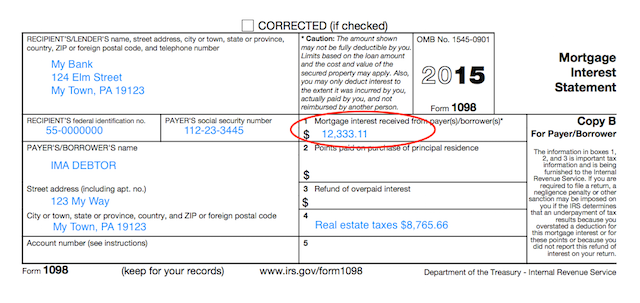
Form 1098, officially titled “Mortgage Interest Statement,” is a tax document that lenders are required to send to borrowers who paid $600 or more in mortgage interest during a calendar year. This form provides a clear summary of several key amounts related to your home loan, primarily the mortgage interest paid, but sometimes also includes points paid on the loan and mortgage insurance premiums.
The primary benefit of Form 1098 for taxpayers is the potential to deduct mortgage interest. The IRS allows homeowners to deduct the interest paid on a mortgage used to buy, build, or substantially improve their main home or a second home. This deduction can significantly reduce your taxable income, as long as your total itemized deductions exceed the standard deduction for your filing status. The principal portion of your mortgage payment is not deductible; only the interest portion qualifies.

The rules for mortgage interest deduction have evolved over time. For mortgages originating on or before December 15, 2017, you can deduct interest on up to $1 million of home acquisition debt ($500,000 if married filing separately). For mortgages originating after December 15, 2017, the limit is reduced to $750,000 ($375,000 if married filing separately). It’s vital to check the exact figures reported on your Form 1098, especially Box 1, which details the mortgage interest received by the lender from you.
Key Takeaway: Form 1098 is a crucial document for homeowners, detailing the mortgage interest paid, which is often deductible and can reduce your taxable income if you itemize.
2. How Mortgage Interest Deduction Impacts Your Taxable Income
The core mechanism through which your Form 1098 can increase your tax refund is by reducing your taxable income. When you file your taxes, you have two main options for deductions: taking the standard deduction or itemizing your deductions. The standard deduction is a fixed dollar amount set by the IRS, which varies based on your filing status, age, and whether you are blind. Itemizing means listing out specific deductions, such as state and local taxes (SALT cap applies), medical expenses (if they exceed a certain AGI threshold), charitable contributions, and, most notably for homeowners, mortgage interest.
To benefit from the mortgage interest deduction reported on your Form 1098, your total itemized deductions must be greater than the standard deduction amount for your filing status. If your itemized deductions, including mortgage interest, property taxes (up to the SALT cap), and other qualifying expenses, surpass the standard deduction, you will itemize. This reduces your Adjusted Gross Income (AGI) further, leading to a lower overall taxable income. A lower taxable income often translates to a lower tax bill and, consequently, a larger tax refund or a smaller amount due.
Consider a scenario: If your standard deduction is $27,700 (Married Filing Jointly in 2023), but your total itemized deductions, including $15,000 in mortgage interest, $10,000 in property taxes, and $3,000 in charitable contributions, amount to $28,000, then you would choose to itemize. This extra $300 in deductions, while seemingly small, represents $300 that isn’t taxed, potentially saving you money depending on your tax bracket. The impact is far more significant if your mortgage interest and other deductions are substantially higher than the standard deduction.
Key Takeaway: Mortgage interest deduction contributes to your itemized deductions; if the total exceeds the standard deduction, it lowers your taxable income, potentially increasing your refund.
3. Beyond Interest: Other Deductible Costs on Form 1098
While mortgage interest is the most prominent deduction reported on Form 1098, the form can also contain information about other amounts that may be deductible. It’s crucial to examine all boxes on your Form 1098, as these additional amounts can further impact your tax situation.
- Points Paid on the Loan (Box 6): Points, also known as loan origination fees or discount points, are charges paid to the lender at the time of closing to obtain a mortgage. Generally, points paid to acquire your main home loan are fully deductible in the year you pay them, provided certain conditions are met. If you refinance or if the points are for a second home, they typically must be amortized (deducted over the life of the loan).
- Mortgage Insurance Premiums (Box 4, typically): Some Form 1098s may report amounts paid for mortgage insurance premiums (MIP or PMI). Historically, these premiums were deductible as an itemized deduction, subject to certain income limitations and phase-outs. However, for tax years 2018 through 2021, this deduction was only temporarily extended. As of the current tax law, this deduction is no longer available. Always check the latest IRS guidelines or consult a tax professional for the most up-to-date information on MIP deductibility.
It’s important to differentiate between what’s reported on Form 1098 and other homeownership-related expenses. For instance, real estate taxes (property taxes) are often paid by homeowners but are not reported on Form 1098 by your mortgage lender. If your property taxes are paid through an escrow account, they will be listed on your annual escrow statement, not your 1098. These taxes are also deductible as part of your itemized deductions, subject to the $10,000 State and Local Tax (SALT) cap.
Key Takeaway: Beyond mortgage interest, Form 1098 may report deductible points, and while mortgage insurance premiums were once deductible, current tax law typically does not allow for this deduction.
4. Maximizing Your Mortgage-Related Tax Benefits
To truly leverage the tax benefits associated with your mortgage, a proactive and informed approach is essential. It’s not just about having a Form 1098; it’s about understanding how to use it effectively within the broader context of your financial picture.
- Keep Meticulous Records: While your lender provides Form 1098, always keep all closing documents, escrow statements, and any other correspondence related to your mortgage. These documents can provide additional details not explicitly on the 1098, such as the exact amount of points paid or property taxes.
- Evaluate Itemizing vs. Standard Deduction Annually: The tax landscape and your personal financial situation can change each year. Always calculate both your standard deduction and your potential itemized deductions to determine which provides the greater tax benefit. Don’t assume itemizing is always better, especially with higher standard deduction amounts.
- Understand Limits and Phase-outs: Be aware of the current limits on mortgage interest deductions (e.g., $750,000 debt limit for newer mortgages) and the $10,000 SALT cap for state and local taxes. These limits can affect how much you can actually deduct.
- Consider Tax Planning Strategies: If your itemized deductions are close to the standard deduction, you might be able to strategically time certain expenses (like property tax payments or charitable contributions) to push your itemized deductions over the standard deduction in a given year.
Understanding these elements allows you to optimize your tax position and ensure you’re not leaving potential refund money on the table. A small increase in deductible expenses can translate to a noticeable difference in your tax outcome.
Key Takeaway: Proactive record-keeping, annual comparison of itemized vs. standard deductions, and awareness of deduction limits are crucial for maximizing your mortgage-related tax benefits.
Comparison: Itemizing vs. Standard Deduction Impact on Refund
| Scenario | Total Itemized Deductions | Standard Deduction (MFJ, 2023) | Deduction Chosen | Potential Refund Impact |
|---|---|---|---|---|
| Scenario 1: Low Mortgage Interest | $10,000 (Mortgage Int.) + $5,000 (SALT) = $15,000 | $27,700 | Standard Deduction | No direct refund increase from mortgage interest, as standard is higher. |
| Scenario 2: Moderate Mortgage Interest & Taxes | $15,000 (Mortgage Int.) + $10,000 (SALT cap) + $3,000 (Charity) = $28,000 | $27,700 | Itemized Deductions | Modest refund increase due to $300 additional deduction ($28,000 – $27,700). |
| Scenario 3: High Mortgage Interest & Other Deductions | $25,000 (Mortgage Int.) + $10,000 (SALT cap) + $15,000 (Charity) = $50,000 | $27,700 | Itemized Deductions | Significant refund increase from $22,300 additional deduction ($50,000 – $27,700). |
Practical Tips for Homeowners Regarding Form 1098
- Verify the Information: Always double-check the figures on your Form 1098 against your own records, especially if you believe there’s a discrepancy. Contact your lender if anything seems incorrect.
- Don’t Assume Itemizing: With the increased standard deduction, many homeowners, especially those with smaller mortgages or who live in areas with lower property taxes, may find the standard deduction more advantageous.
- Consult a Tax Professional: Complex situations, such as refinancing, home equity loans, or significant home improvements, can affect your mortgage interest deduction. A qualified tax advisor can provide personalized guidance.
- Keep Records for Seven Years: The IRS generally has a three-year statute of limitations for audits, but in cases of substantial underreporting of income, it can extend to six years. Keeping tax-related documents for seven years is a good general practice.
- Understand the SALT Cap: Remember the $10,000 limitation on state and local tax deductions (including property taxes). This cap significantly impacts the total amount you can itemize, regardless of your mortgage interest.
- Be Aware of Loan Purpose: Interest on home equity loans or lines of credit (HELOCs) is only deductible if the funds were used to buy, build, or substantially improve the home securing the loan. Interest on loans used for personal expenses (e.g., vacations, car purchases) is not deductible.