
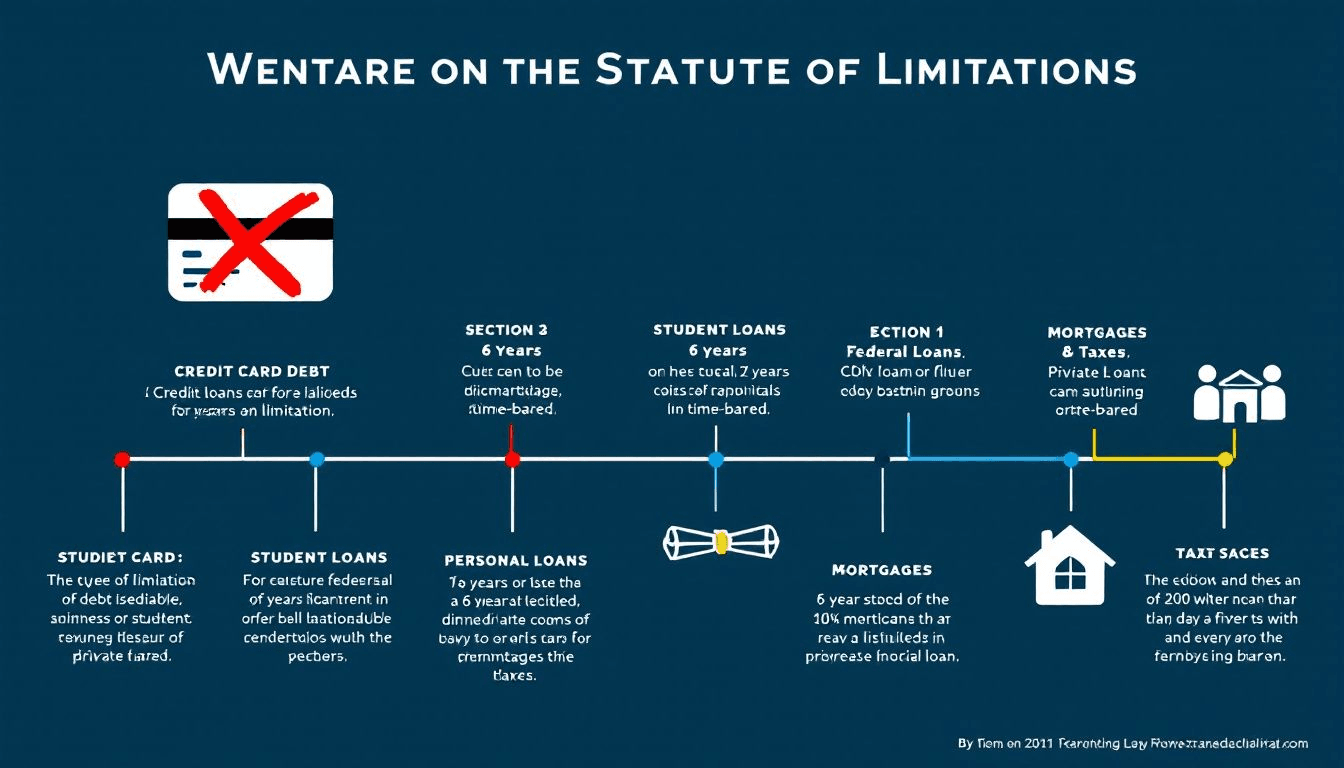
Is Tax Credit Debt Statute-Barred? Understanding Limitations
The concept of debt being "statute-barred" refers to a legal principle where the time limit for creditors to take court action to recover a debt has expired. For tax credit overpayments, determining if such a debt is statute-barred involves navigating specific UK legislation concerning HM Revenue & Customs (HMRC) and differs significantly from commercial or consumer debt.
This analysis will detail the statutory limitations periods, HMRC’s unique recovery mechanisms, and the technical trade-offs involved in managing these debts, providing a precise, evidence-based understanding for individuals facing such situations.
Understanding Statute-Barred Debt Principles
A debt becomes statute-barred when the statutory period within which a creditor can initiate legal proceedings for its recovery has elapsed. In England and Wales, the primary legislation governing this is the Limitation Act 1980. For most simple contract debts, this period is six years from the date the cause of action arose. Upon expiry, the debt is not extinguished; rather, its enforceability through court action is removed. Creditors are still legally permitted to request payment and use non-court recovery methods, but cannot obtain a County Court Judgment (CCJ) to enforce payment.

For debts under a deed or mortgage, the limitation period typically extends to 12 years. These periods are critical for private creditors, offering a defined framework for debt management and dispute resolution. Failure to act within these statutory windows renders legal recourse impossible, forcing creditors to rely on voluntary repayment or alternative, less formal collection strategies.
Specifics of Tax Credit Debt and Limitations Periods
HMRC debt, including tax credit overpayments, operates under a distinct legal framework compared to standard consumer debt, primarily due to HMRC’s statutory powers as a Crown body. The Limitation Act 1980 often does not apply in the same straightforward manner. HMRC’s primary legislation for tax credits includes the Tax Credits Act 2002 and related regulations, which grant specific powers for identifying and recovering overpayments.
For non-fraudulent overpayments, HMRC typically has six years to initiate court proceedings from the date the overpayment was formally established and demanded (i.e., the "cause of action" accrues). However, this limitation is specific to court action. HMRC possesses administrative powers, such as deducting overpayments from ongoing tax credits or other benefits (e.g., Universal Credit), or using Direct Recovery of Debt (DRD) from bank accounts. These administrative recovery methods are generally not subject to the same six-year limitation period. Furthermore, if an overpayment resulted from fraudulent activity, HMRC often faces no statutory time limit for recovery. The complexity arises from the distinction between the time to *assess* an overpayment and the time to *recover* it via different mechanisms.
Impact of Acknowledgment and Payment
For most commercial and consumer debts, a written acknowledgment of the debt or a partial payment can "reset" the limitation period, initiating a new six-year window for legal action from the date of the acknowledgment or payment. This mechanism, outlined in sections 29 and 30 of the Limitation Act 1980, is a critical consideration for debtors, as inadvertent actions can revive an otherwise statute-barred debt.
However, the application of this principle to tax credit debt is less straightforward due to HMRC’s unique statutory recovery powers. While acknowledging a tax credit overpayment might confirm its existence, it typically does not "restart" a limitation period in the same manner as for a private debt, especially concerning HMRC’s administrative recovery routes (e.g., deductions from ongoing benefits). HMRC’s power to recover through these statutory means is often not contingent on a six-year court action timeline being reset. Therefore, while engagement is often advisable for negotiation, individuals should not assume it automatically extends a limitation period for all recovery methods as it would for a private creditor.
Technical Trade-offs and Best Practices
Navigating tax credit overpayments involves several technical trade-offs. Firstly, challenging HMRC’s assessment requires a robust understanding of the specific legislation and evidence to support your position. This can be resource-intensive, potentially requiring professional legal or financial advice. The burden of proof to demonstrate the overpayment is incorrect or that HMRC’s recovery action is time-barred in relation to court action rests on the individual, which can be significant. The technical trade-off here is investing time and resources into a potentially complex legal challenge versus the immediate financial implications of repayment.
Secondly, engaging directly with HMRC to negotiate a repayment plan or challenge the overpayment can be effective. HMRC has discretion in repayment terms, and in certain circumstances, may even consider writing off parts of the debt under specific hardship provisions. The trade-off is often between the certainty of a managed repayment plan (even if for an amount you dispute) and the uncertainty and potential costs of a prolonged challenge. For instance, accepting a repayment plan of £50 per month over 24 months for a £1,200 debt provides financial predictability, whereas challenging the entire sum could lead to higher costs if unsuccessful or extended stress.
Seeking expert advice from a qualified debt advisor or solicitor specialising in welfare benefits and tax law is a critical best practice. These professionals can assess the specific circumstances, evaluate the legality of HMRC’s claim, identify any procedural errors, and advise on the most effective strategy, potentially leveraging specific legislative interpretations that are not apparent to a layperson. Their analysis can determine if challenging the debt, negotiating a settlement, or seeking an official review is the optimal path, providing a data-driven approach to an often emotionally charged issue.
| Debt Type | Standard Limitation Period | Applies to Tax Credit Debt? | Primary Enforcement Mechanisms |
|---|---|---|---|
| Simple Contract Debt (e.g., credit card) | 6 years (from cause of action) | No (generally, for administrative recovery) | County Court Judgment (CCJ), bailiffs |
| Mortgage Debt (capital) | 12 years (from last payment/acknowledgment) | N/A | Repossession, CCJ, charge on property |
| HMRC Tax Credit Overpayment (non-fraudulent, for court action) | 6 years (from assessment/demand) | Yes (for court action only) | Deduction from benefits, Direct Recovery of Debt (DRD), CCJ |
| HMRC Tax Credit Overpayment (fraudulent) | Effectively no statutory limit | Yes | Deduction from benefits, DRD, CCJ, criminal prosecution |
| Council Tax Arrears | 6 years (for each annual bill) | N/A | Liability Order, bailiffs, attachment of earnings |
"While the Limitation Act 1980 provides a clear six-year window for many debts, individuals must understand that government bodies like HMRC operate under distinct statutory powers. Misapplying consumer debt rules to Crown debt can lead to critical missteps in managing overpayments." — Legal Aid Specialist, Debt Recovery Law
"HMRC’s ability to recover tax credit overpayments through administrative deductions or Direct Recovery of Debt bypasses the conventional court action limitations. The key is often not whether the debt is old, but how HMRC chooses to enforce it, and whether the initial assessment was robust." — Senior Financial Advisor, Welfare Benefits Expertise
FAQ: What is the specific limitation period for tax credit overpayments?
There isn’t a single, straightforward limitation period like the six years for consumer debts. For HMRC to pursue a tax credit overpayment through court action, they generally have six years from the date the overpayment was formally assessed and a demand for repayment was issued. However, HMRC’s administrative recovery powers, such as deducting from ongoing benefits or using Direct Recovery of Debt (DRD), are typically not subject to this six-year limit in the same way. For fraudulent overpayments, there is effectively no statutory time limit for recovery.
FAQ: Can HMRC still recover a tax credit overpayment if it’s "old"?
Yes, HMRC can often still recover "old" tax credit overpayments. The relevant date for court action is usually the date of HMRC’s assessment or demand, not necessarily the date the overpayment occurred. Furthermore, their administrative recovery methods (deductions from benefits, DRD) are often not time-barred by the Limitation Act. If the overpayment was due to fraud, there is generally no time limit for HMRC to pursue recovery, regardless of how old the debt is.
FAQ: Does making a payment restart the clock for tax credit debt?
For most private debts, making a payment or acknowledging the debt in writing restarts the statutory limitation period. However, for tax credit debt, this mechanism is less impactful due to HMRC’s distinct statutory powers. While making a payment confirms the debt’s existence, it typically does not "reset" the limitation period in a way that prevents HMRC from utilizing its administrative recovery methods, which are often not subject to the same time constraints as court action. It’s crucial to understand that HMRC’s ability to recover via deductions is primarily governed by welfare benefit regulations, not solely by the Limitation Act.