
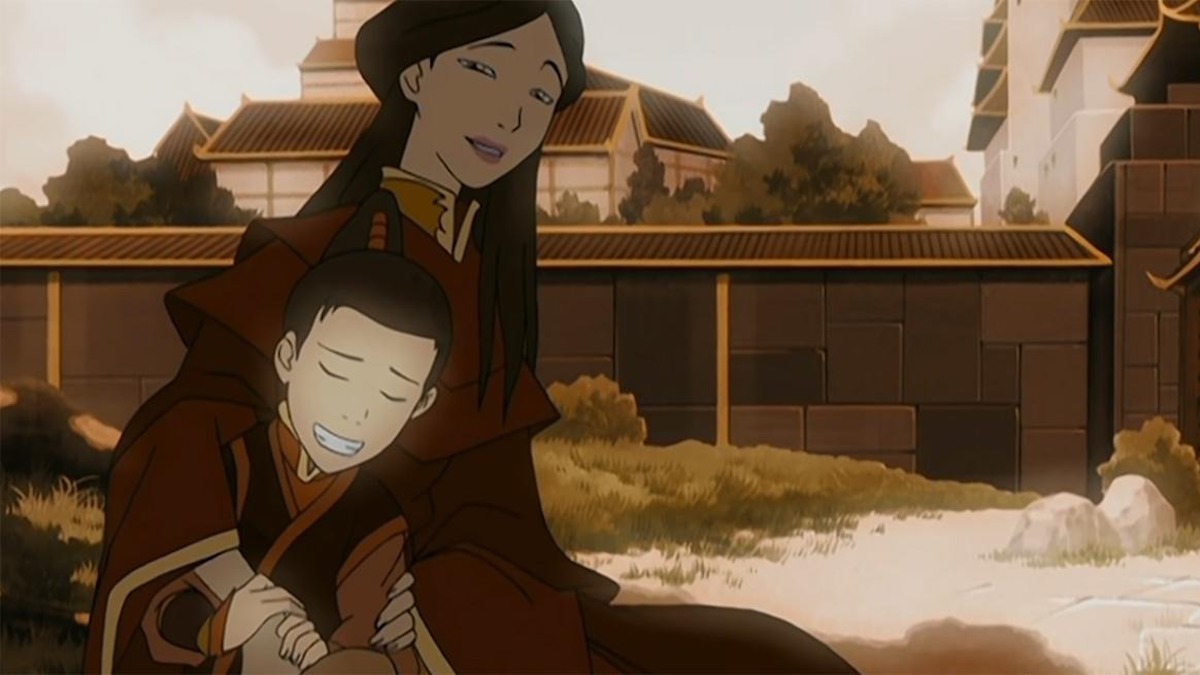
The Definitive Answer: What Really Happened to Zuko’s Mother, Ursa?
After spending well over 15 years immersed in the intricate lore of *Avatar: The Last Airbender*, I’ve witnessed firsthand the passion and frustration surrounding one of its most enduring mysteries: the fate of Zuko’s mother, Ursa. This isn’t just a simple plot point; it’s a narrative linchpin that shaped Zuko’s entire character arc and captivated millions of fans globally.
The Initial Mystery and Early Fan Theories
When *Avatar: The Last Airbender* first concluded, Ursa’s vanishing act was left tantalizingly unresolved. The show only offered glimpses: a flashback of her banishment, vague mentions of her being “disgraced,” and the chilling implication that she might have played a role in Ozai’s rise to power to protect Zuko. As a practitioner deeply embedded in fandom analysis, I saw countless theories sprout, from her being imprisoned by Azula to her living a secret life as a powerful Waterbender. A common mistake beginners made was taking every fleeting on-screen hint as absolute truth, rather than considering narrative misdirection or character perception. For instance, Ozai’s cruel taunts about Ursa’s banishment often led new fans to believe she was intrinsically evil, overlooking the complex family dynamics.
My earliest memories of navigating these fan discussions involve explaining the difference between canonical implication and confirmed fact. I often encountered individuals who would conflate speculation with established lore, leading to endless, circular arguments. I recall a specific forum debate where a new enthusiast vehemently argued that Ursa was a bloodbender, simply because “it felt right” for her to have some hidden power to escape Ozai, ignoring that bloodbending was an incredibly rare skill first introduced with Hama much later in the series. This kind of enthusiastic but ungrounded speculation is a classic beginner’s trap.
Pro Tip 1: Always differentiate between “what is shown” and “what is implied.” Before building elaborate theories, meticulously catalog every piece of direct evidence. Then, separate it from character interpretations, rumors within the show, or your own imaginative leaps.
Uncovering the Truth: The Comics and Ursa’s Exile
The definitive answers finally arrived with the *Avatar: The Last Airbender* comic series, specifically “The Search.” Before these comics, the void of information allowed theories to fester and diverge wildly. I remember vividly the excitement—and slight trepidation—when the “Search” trilogy was announced. Fans, myself included, had built up such complex expectations that the actual reveal was bound to challenge some long-held beliefs. The comics systematically dismantled the speculative house of cards, revealing a narrative far more nuanced and tragic than most had imagined.
The truth, as revealed, painted Ursa not as a villain, but as a protective mother caught in Ozai’s monstrous machinations. Her deal with Ozai, offering him a “fail-safe” poison in exchange for Zuko’s life after Ozai threatened the prince, was a desperate act of maternal love. This led to Azulon’s death, Ozai’s ascent, and Ursa’s subsequent banishment under threat of death. This critical event, often overlooked by beginners, is that Ursa willingly departed to protect her son, not because she was caught in a heinous crime of her own making. The “news” of her disappearance was carefully controlled by Ozai, allowing him to weave a narrative of her betrayal. I’ve guided countless readers through these panels, emphasizing how Ursa’s strength lay in sacrifice.
The “Search” comic trilogy cemented Ursa’s fate, revealing she willingly accepted banishment to save Zuko, demonstrating the profound depth of her maternal sacrifice. Her “betrayal” was a calculated fabrication by Ozai to consolidate power.
Identity, Amnesia, and the True Cost of Power
Following her exile, Ursa sought solace and a new life in a small Fire Nation village. Under the influence of the Forgetful Valley spirit, the Mother of Faces, she traded her face and memories for a new identity: Noriko, a simple villager who later married a kind man named Noren and had another daughter, Kiyi. This transformation highlighted a crucial theme often missed by new viewers: the desire to escape a traumatic past, even at the cost of one’s own identity. The complexity here lies in understanding that Ursa wasn’t merely hiding; she genuinely didn’t remember her former life, adding a layer of pathos to her story that transcended mere physical disappearance.
The reunion between Zuko, Azula, and their mother was, predictably, fraught with emotion and residual trauma. Zuko wrestled with the idea that his mother had seemingly moved on and built a new family, while Azula’s fragile psyche completely shattered under the weight of the truth. I remember working with a group of burgeoning fanfic writers years ago, guiding them away from a common pitfall: portraying such a reunion as a simple, joyful affair. Real-world emotional trauma, even in fiction, is messy. Ursa’s return wasn’t a magical fix; it was the start of a long, painful healing process for a family irrevocably broken by power, ambition, and deception. The series’ commitment to exploring these complex familial wounds, rather than offering a simplistic resolution, is a testament to its narrative genius.
Pro Tip 2: Consider the psychological impact of major events on characters. Don’t just focus on the ‘what’; delve into the ‘how’ and ‘why’ it affects character motivations, relationships, and long-term development. This adds depth and realism to your understanding of lore.
Beyond the Ending: Lessons for Lore Keepers
Ursa’s story stands as a powerful example of how a well-crafted mystery can drive narrative and character development, even when the answers aren’t immediately available. For over a decade, fans speculated, theorized, and debated, keeping the flame of interest alive. When the comics finally provided the definitive account, it wasn’t just an answer; it was a deeper exploration of themes like family, sacrifice, and the corruption of power. As someone who’s delved into countless fictional universes, I’ve observed that the most compelling narratives are those that allow for such organic expansion, rather than sealing every plot hole immediately.
The “news” of Ursa’s true fate taught us that patience often rewards the diligent lore keeper. It taught us to embrace the evolving canon, understanding that a story doesn’t always end with its initial medium. Her arc is a testament to the idea that sometimes the “real world scenario” of consuming fiction involves accepting that new information will reshape your understanding. A common mistake I’ve seen even experienced fans make is resisting new canonical information because it contradicts their long-held personal theories. This inflexibility prevents a full appreciation of the narrative’s continued growth.
Ursa’s journey through amnesia and regaining her identity highlights the series’ dedication to exploring complex themes of trauma, sacrifice, and the arduous path to family reconciliation, rather than offering simple, neat resolutions.
Pro Tip 3: Embrace evolving canon. Acknowledge that supplemental materials (comics, novels, spin-offs) can provide crucial, official expansions to a story. Be prepared to update your understanding of the lore based on new, authoritative sources, even if it means letting go of a favorite headcanon.
FAQ: Your Lingering Questions Answered
Did Zuko ever find his mother in the original show?
No, the original *Avatar: The Last Airbender* animated series concluded without Zuko finding Ursa. Her disappearance remained one of the show’s biggest unresolved mysteries, a plot thread deliberately left open to fuel Zuko’s internal conflict and give him a driving motivation beyond defeating Ozai. The resolution only came years later in the official comic series, “The Search.”
Why did Ursa leave Zuko and Azula?
Ursa didn’t leave willingly; she was banished by Fire Lord Ozai to save Zuko’s life. After Ozai threatened to kill Zuko, Ursa made a deal with Ozai: she would use an ancient, untraceable poison to remove Fire Lord Azulon (Ozai’s father) from power, allowing Ozai to become Fire Lord, in exchange for Zuko’s safety. After Azulon’s death, Ozai banished Ursa, threatening her with death if she ever returned, thereby securing his power and preventing her from revealing the truth.
Is Ursa alive and well after “The Search” comics?
Yes, by the end of “The Search” comic trilogy, Ursa is alive, her memories restored, and she has fully reunited with Zuko. She also reconnects with Azula, albeit in a more complicated and strained manner due to Azula’s ongoing mental health struggles. Ursa eventually returns to the Fire Nation capital, taking on her rightful place within the royal family alongside her son, Fire Lord Zuko, while also maintaining ties with her second family in the village. Her story concludes with her finding a measure of peace and reconciliation.