
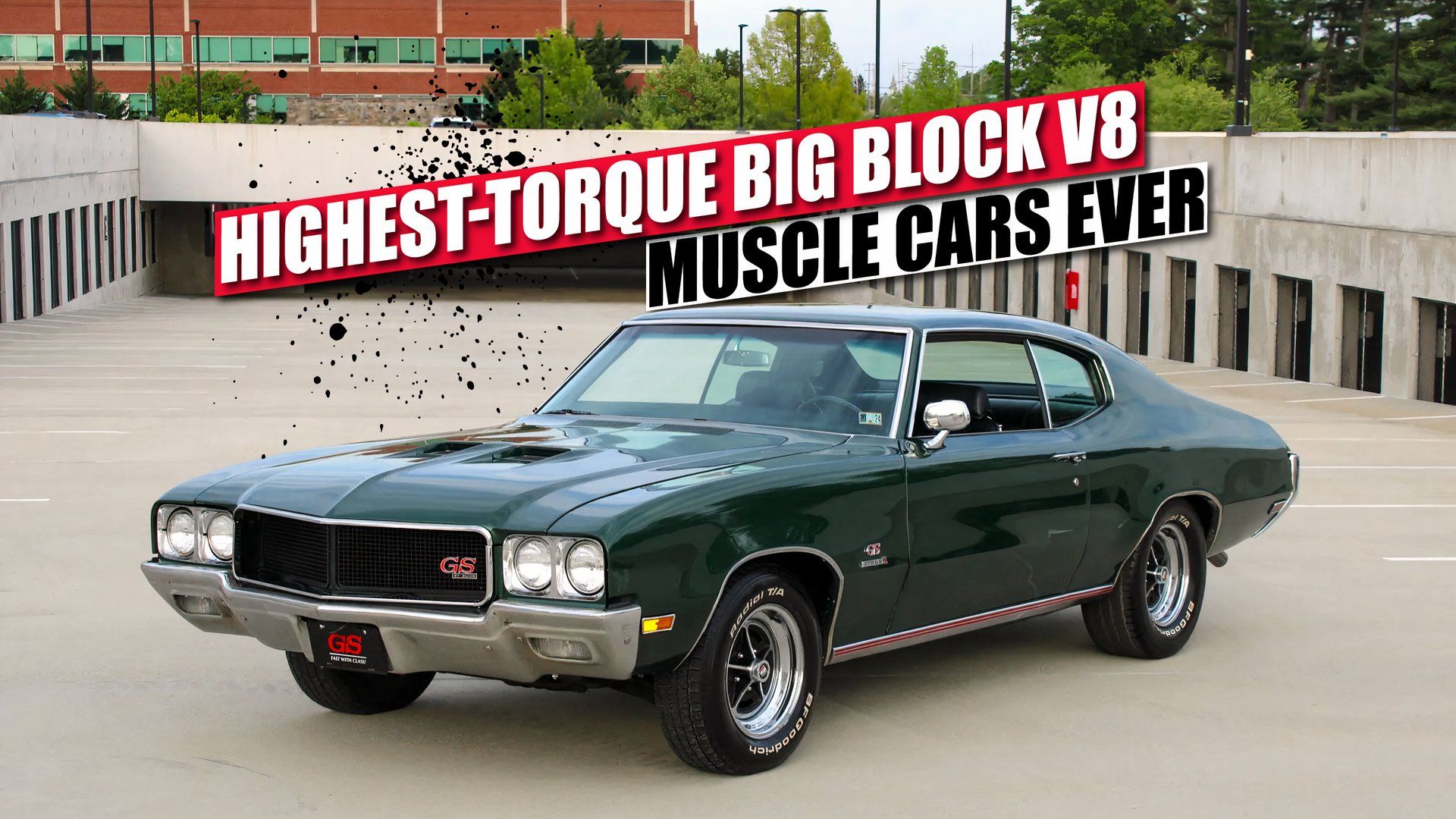
Demystifying Muscle Car Torque: A Deep Dive into High-Performance Engineering
In the realm of American muscle cars, raw power is often measured by a single, exhilarating metric: torque. This rotational force, the engine’s ability to twist the driveshaft, directly translates to the visceral shove felt during acceleration. For enthusiasts and performance seekers, understanding which vehicles lead in this crucial category is paramount to appreciating the pinnacle of internal combustion prowess.
The Torque Titans: Leading Contenders in the Muscle Car Arena
When evaluating which muscle car delivers the most torque, the conversation invariably gravitates towards a few dominant players, primarily from Stellantis’ Dodge brand. The Dodge Challenger SRT lineage, especially the Hellcat and its extreme derivatives like the Redeye and the limited-production Demon, has set an exceptionally high bar. These machines harness supercharged HEMI V8 engines, specifically designed to maximize immediate rotational force. The Challenger SRT Demon 170, the final ‘Last Call’ iteration, stands as a prime example, achieving a monumental 1,025 lb-ft of torque with E85 ethanol, showcasing unparalleled raw power.

Ford’s answer is the Mustang Shelby GT500, equipped with a supercharged 5.2-liter ‘Predator’ V8 engine, delivering a formidable 625 lb-ft of torque. While not matching the Demon’s peak, its significant output ensures blistering acceleration. Chevrolet also offers the Camaro ZL1, powered by a supercharged 6.2-liter LT4 V8, generating a robust 650 lb-ft of torque. Each of these vehicles leverages forced induction—specifically superchargers—to elevate their torque figures far beyond naturally aspirated counterparts. This strategic use of supercharging is the cornerstone of their immense power delivery, providing the exhilarating launch feel muscle car enthusiasts demand.
Engineering for Extremes: The Supercharger’s Dominance in Torque Production
The primary mechanism behind the stratospheric torque figures in modern muscle cars is the supercharger. Unlike turbochargers, which use exhaust gases, superchargers are belt-driven directly by the engine’s crankshaft. This mechanical linkage ensures that as the engine revs, the supercharger compresses air and forces it into the cylinders, leading to an almost instantaneous increase in volumetric efficiency. More air, combined with precisely metered fuel, results in a more potent combustion event, directly translating to greater torque output. The immediate response characteristic of superchargers is highly valued in muscle cars, where the sensation of instant, overwhelming power is key.
This approach contrasts sharply with naturally aspirated engines, even large displacement ones. While a naturally aspirated V8 produces substantial torque, it typically cannot match the power-dense output of a forced induction system per liter. Superchargers allow an engine to behave like a much larger one by dramatically increasing the air charge, enabling explosive power delivery across a wide RPM band. The engineering challenge involves optimizing supercharger efficiency, managing heat, and ensuring engine internals withstand immense pressures. Manufacturers invest heavily in specialized components and advanced cooling systems to create reliable, high-torque powerplants capable of sustained performance.
Torque is the punch, horsepower is how fast you deliver it. In a muscle car, you want that immediate, guttural punch off the line, and that’s pure torque speaking.
— Automotive Engineer, speaking on acceleration dynamics.
The Holistic View: Usable Torque and Performance Integration
While peak torque figures are impressive on paper, the true measure of a muscle car’s performance lies in how effectively that torque is deployed and managed. A staggering torque number can become academic if the vehicle’s ancillary systems cannot handle it. Factors like the engine’s power curve, transmission efficiency, driveline strength, and critically, tire traction, all play a significant role. A car with immense peak torque but a narrow power band or constant wheelspin might feel less potent than one with a slightly lower peak but a broader, flatter, and consistently accessible torque curve.
Modern high-performance transmissions, such as the robust ZF 8-speed automatic in Dodge SRT products or the advanced Tremec 7-speed dual-clutch in the Shelby GT500, are instrumental in optimizing torque delivery. These are engineered to handle extreme forces, provide rapid gear changes, and keep the engine within its optimal torque band. Furthermore, chassis rigidity, suspension tuning, and advanced traction control systems are indispensable. They work in concert to channel immense power to the ground efficiently, minimizing wheel hop and maximizing grip. Without these integrated engineering solutions, even the most torque-rich engine would struggle to translate its potential into usable forward momentum; thus, holistic design ensures high torque is realized.
Developing a high-torque engine isn’t just about cranking up the boost. It’s about ensuring the entire powertrain can reliably manage that force, from the crankshaft to the contact patch. Otherwise, it’s just wasted energy.
— Powertrain Development Lead, during a technical briefing.
| Car Model | Engine | Torque (lb-ft) | Horsepower (hp) | Induction |
|---|---|---|---|---|
| Dodge Challenger SRT Demon 170 | Supercharged 6.2L HEMI V8 | 1,025 | 1,025 | Supercharged |
| Dodge Challenger SRT Hellcat Redeye Widebody | Supercharged 6.2L HEMI V8 | 797 | 797 | Supercharged |
| Ford Mustang Shelby GT500 | Supercharged 5.2L ‘Predator’ V8 | 625 | 760 | Supercharged |
| Chevrolet Camaro ZL1 | Supercharged 6.2L LT4 V8 | 650 | 650 | Supercharged |
The Current Apex: Verdict and Recommendation
Based on verifiable peak torque figures from factory production muscle cars, the Dodge Challenger SRT Demon 170 unequivocally holds the crown. Its ability to generate an astounding 1,025 lb-ft of torque with E85 ethanol places it in a league of its own, demonstrating an extreme commitment to straight-line performance and drag strip dominance. This achievement is a testament to Dodge’s relentless pursuit of raw power and the extensive engineering required to manage such forces.
However, a nuanced recommendation considers more than just peak numbers. While the Demon 170 is the undisputed torque king, vehicles like the Ford Mustang Shelby GT500 and the Chevrolet Camaro ZL1 offer compelling alternatives that integrate significant torque with superior handling dynamics for a more balanced performance package. The GT500, with its sophisticated dual-clutch transmission and track-focused chassis, delivers its 625 lb-ft of torque with precision and control, making it a formidable contender on both street and track. Similarly, the Camaro ZL1 provides an exceptional blend of torque, handling, and daily drivability, showcasing comprehensive engineering.
Verdict: For enthusiasts prioritizing the absolute highest torque output, especially for quarter-mile assaults, the Dodge Challenger SRT Demon 170 is the definitive choice, singularly focused on maximum rotational force. For those seeking a high-torque muscle car that also excels in cornering and offers broader performance capabilities, the Ford Mustang Shelby GT500 or the Chevrolet Camaro ZL1 represent exceptionally engineered alternatives, providing a more versatile high-performance driving experience without compromising the exhilarating punch synonymous with American muscle.
Frequently Asked Questions About Muscle Car Torque
What is the fundamental difference between torque and horsepower?
Torque measures rotational force, the “twisting power” an engine produces, dictating how quickly a vehicle accelerates from a standstill or pulls loads. Horsepower, conversely, calculates how fast that torque performs work over time. While torque gets you moving, horsepower largely determines top speed and how quickly it’s reached. Think of torque as the force to turn a wrench, and horsepower as the speed at which you can turn it repeatedly.
Why is high torque particularly important for muscle cars?
Muscle cars are renowned for their straight-line acceleration and aggressive feel, and high torque is fundamental to this. A powerful burst of torque provides the immediate, exhilarating shove that pins you back during launch, crucial for impressive quarter-mile times. While horsepower is vital for sustained high speeds, it’s torque that delivers the visceral punch at lower RPMs and during initial acceleration, defining a core aspect of the muscle car experience.
Does a higher torque number always mean a faster car?
Not necessarily. While high torque is a significant factor in acceleration, it’s not the sole determinant of overall speed. Other critical factors include vehicle weight, aerodynamic drag, transmission efficiency, gearing ratios, and critically, tire traction. A car with immense torque might struggle to effectively put that power to the ground if it suffers from excessive wheelspin, high driveline losses, or an ineffective chassis. A well-balanced vehicle integrating strong torque with optimal weight, efficient power delivery, and superior traction will often outperform a car with merely higher peak torque but less effective overall engineering.