
Understanding Drag Car Torque Capabilities
In the high-stakes world of drag racing, raw power translates directly into competitive advantage. While horsepower often garners headlines, it is torque—the rotational force that accelerates the vehicle from a standstill—that fundamentally dictates a drag car’s initial launch and subsequent rapid acceleration down the strip. Analyzing how drag cars generate and manage this colossal force reveals critical distinctions in engineering philosophies and performance outcomes.
Understanding the intricacies of torque production is essential for anyone looking to comprehend the sheer physics at play in a quarter-mile dash. The two dominant philosophies in achieving astronomical torque figures revolve around either maximizing naturally aspirated engine efficiency or employing advanced forced induction technologies. Each approach presents a unique set of engineering challenges and delivers a distinct power delivery profile.
Defining Drag Car Torque: The Foundation of Acceleration
Torque, often expressed in foot-pounds (ft-lb) or Newton-meters (Nm), is the twisting force exerted by the engine on the drivetrain. In a drag racing context, peak torque at the wheels is paramount during the launch phase, as it is directly responsible for overcoming the vehicle’s inertia and maximizing tire adhesion. A drag car needs to generate an instantaneous surge of torque to catapult itself forward, making the torque curve’s characteristics as crucial as its absolute peak value.

Unlike horsepower, which represents the rate at which work is done (a function of torque and engine speed), torque itself is the raw pushing power. A high torque figure at lower RPMs is particularly advantageous for drag racing, allowing the car to accelerate fiercely off the line before horsepower takes over to sustain acceleration at higher speeds. This distinction underscores why specific engine architectures and power-adder choices are favored in different drag racing classes.
Naturally Aspirated Powerplants: The Art of Atmospheric Pressure
The naturally aspirated (NA) approach to drag car torque production relies on atmospheric pressure to fill the engine’s cylinders with air. Achieving substantial torque with NA engines typically involves maximizing engine displacement, optimizing airflow through meticulously designed cylinder heads and intake manifolds, and utilizing aggressive camshaft profiles to enhance volumetric efficiency. These engines often feature massive V8 configurations, sometimes exceeding 800 cubic inches, built with lightweight components and high-compression ratios.
The logical argument for the NA approach centers on its predictability and linear power delivery. Without the complex systems associated with forced induction, NA engines often offer a broader, more controllable powerband, which can be advantageous in certain racing conditions or for drivers who prefer a more direct feel. While they may not reach the peak torque numbers of their forced-induction counterparts, a highly optimized NA engine can still produce well over 1,000 ft-lb of torque, delivered with remarkable consistency and responsiveness, particularly in higher RPM ranges where volumetric efficiency peaks. Their torque curve tends to build more gradually, peaking at higher engine speeds compared to boost-fed engines.
Forced Induction Dominance: Unleashing Boosted Power
Forced induction systems—superchargers and turbochargers—represent the pinnacle of drag car torque generation. These devices compress the incoming air, forcing a greater mass of air-fuel mixture into the cylinders than atmospheric pressure alone could achieve. This increased charge density directly translates into significantly more power and, critically, vastly elevated torque figures. Top Fuel dragsters, for example, employ massive superchargers to produce an estimated 8,000 to 10,000 ft-lb of torque, illustrating the sheer multiplicative effect of forced induction.
The advantage of forced induction lies in its ability to generate immense torque at relatively lower engine speeds. Superchargers, being mechanically driven, offer instant boost and a very flat, potent torque curve from off-idle. Turbochargers, powered by exhaust gases, might have a slight lag but can produce even higher peak boost pressures and, consequently, higher torque figures once spooled. The logical argument here is clear: by increasing the effective displacement of the engine through forced induction, one directly enhances the engine’s ability to create rotational force, yielding torque numbers often double or triple those of even the most extreme naturally aspirated builds of similar displacement.
Factors Influencing Torque Delivery and Utilization
While an engine’s raw torque output is impressive, its effective utilization on the drag strip involves a complex interplay of various mechanical and electronic systems. The drivetrain, including the transmission, driveshaft, and rear differential, must be engineered to withstand and transmit these immense forces without failure. Gearing plays a pivotal role, multiplying engine torque at the wheels to maximize acceleration and optimize the engine’s operating RPM throughout the run.
Moreover, tire technology and chassis tuning are equally critical. Even the most powerful engine is useless if its torque cannot be translated into forward motion due to wheelspin. Advanced traction control systems, sophisticated suspension geometries, and specially formulated drag radial tires are all designed to manage and optimize the transfer of thousands of foot-pounds of torque into usable thrust. Without these complementary systems, much of the engine’s potential torque would simply be lost as smoke and noise.
Key Aspects of Torque Optimization in Drag Cars
- Engine Displacement: Larger displacement generally means more air/fuel per cycle, leading to higher torque in NA setups.
- Forced Induction Strategy: Superchargers or turbochargers compress intake air, dramatically increasing charge density and thus torque output.
- Camshaft Profile: Aggressive cam designs optimize valve lift and duration for maximum cylinder filling, crucial for both NA and boosted engines.
- Cylinder Head Design: Efficient porting and valve sizing minimize airflow restrictions, allowing engines to breathe better and produce more torque.
- Exhaust System Tuning: Properly designed headers and exhaust systems scavenge spent gases efficiently, improving cylinder filling and overall engine output.
- Fuel System Capacity: Delivering sufficient, precisely metered fuel is paramount for sustaining extreme power levels and preventing detonation.
- Engine Management Systems: Sophisticated ECUs control ignition timing, fuel delivery, and boost pressure with pinpoint accuracy to optimize torque delivery.
- Drivetrain Durability: Robust transmissions, driveshafts, and differentials are essential to withstand and transmit the immense torque without failure.
Common Mistakes to Avoid
- Ignoring Drivetrain Losses: Focusing solely on engine dyno numbers without accounting for parasitic losses through the transmission, driveshaft, and differential.
- Over-reliance on Peak Numbers: Neglecting the shape of the torque curve across the entire RPM range, especially at launch.
- Inadequate Tire and Chassis Setup: Failing to match tire compound, suspension settings, and weight transfer to the engine’s power delivery, leading to excessive wheelspin.
- Improper Gear Selection: Using gear ratios that do not keep the engine in its optimal powerband for maximum acceleration through the entire run.
- Underestimating Thermal Management: Insufficient cooling for engines and forced induction components can severely limit sustained torque output and reliability.
- Neglecting Data Acquisition: Not logging and analyzing data from each run to identify areas for improvement in torque delivery and vehicle setup.
FAQ
How is drag car torque typically measured?
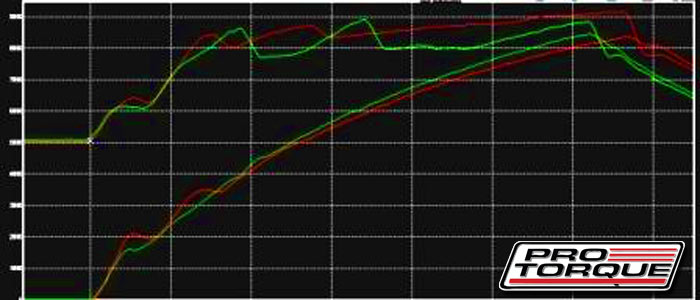
Drag car torque is primarily measured using a dynamometer (dyno), which applies a load to the engine or wheels while measuring the rotational force. Engine dynos measure torque directly at the crankshaft, while chassis dynos measure torque at the wheels, providing a more realistic representation of the force delivered to the ground, albeit after drivetrain losses. Advanced telemetry systems also allow for estimation and verification of torque output during actual runs by analyzing acceleration data.
Does more torque always guarantee faster elapsed times?
While high torque is crucial for rapid acceleration, it does not unilaterally guarantee faster elapsed times (ETs). The effective utilization of that torque is equally vital. Excessive torque without adequate tire adhesion will result in wheelspin and lost time. A car with slightly less peak torque but a broader, more usable torque curve, combined with superior chassis tuning, efficient drivetrain, and precise driver input, can often achieve better ETs than a car with significantly higher peak torque that struggles with traction or poor power management.
What is the primary difference in torque characteristics between a street car and a purpose-built drag car?
The primary difference lies in the optimization for specific performance envelopes. A street car’s engine is designed for a broad, tractable powerband across a wide range of RPMs, prioritizing drivability and fuel efficiency, often with peak torque occurring at moderate RPMs. A purpose-built drag car’s engine, by contrast, is engineered for maximum, instantaneous torque output at launch and through a very narrow, high-stress RPM range, sacrificing drivability and longevity for sheer straight-line acceleration. This specialization often results in extreme power-to-weight ratios and torque figures that are orders of magnitude higher than even high-performance street vehicles.
Verdict: The Edge of Boosted Power
When assessing how much torque a drag car produces, the evidence overwhelmingly points to forced induction as the superior method for achieving the highest absolute figures. By compressing the intake charge, superchargers and turbochargers multiply an engine’s inherent torque production capabilities far beyond what naturally aspirated designs can achieve. The instant, massive surge of torque available at lower RPMs with forced induction provides an unparalleled advantage in launching a heavy vehicle from a dead stop and sustaining aggressive acceleration.
While naturally aspirated engines continue to demonstrate incredible engineering prowess and can deliver formidable torque, especially in purpose-built, large-displacement forms, they inherently operate within the constraints of atmospheric pressure. Therefore, for the absolute maximum torque output required to dominate the fastest drag racing classes, the implementation of forced induction systems remains the definitive and most effective strategy.