
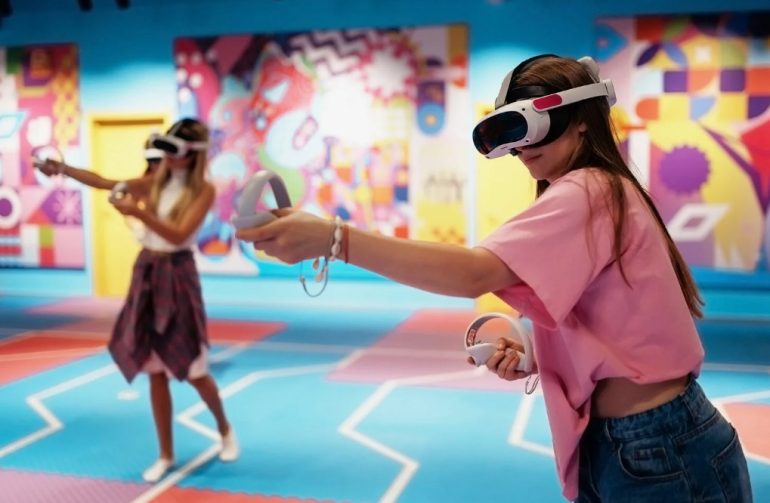
Comparing Yields in Modern versus Traditional Arcades
Evaluating financial performance across commercial entertainment sectors requires a close examination of capital requirements and operational yields. Traditional coin-operated arcades have provided reliable income for decades, yet their reliance on bulky physical machinery places clear limits on profit margins. Managing a modern VR Entertainment Business introduces a fundamentally different economic model that optimizes physical floor space through software flexibility. Industry solution providers like BATTLE START showcase how digital arena setups eliminate heavy freight costs while enabling fast content updates that keep visitors engaged. While classic pinball and cabinet games trigger nostalgia, immersive virtual environments command higher ticket prices per customer session. Consequently, investors comparing these two operational paths must look beyond initial hardware prices to analyze long-term returns on capital.
Capital Allocation
Outfitting a commercial gaming floor with traditional mechanical cabinets demands substantial initial capital for manufacturing, shipping, and floor preparation. Each coin-operated machine delivers a single predefined game experience, meaning that expanding your attraction lineup requires buying additional physical inventory. Building a thriving VR Entertainment Business offers significantly greater spatial efficiency because multiple software titles run on identical headset hardware. A single open floor area converts from a fantasy arena into an educational simulation with a mouse click.
Financial audits across commercial amusement centers indicate that software-driven attractions yield up to thirty-five percent higher revenue per square foot than standalone mechanical cabinets.
Lower physical footprint requirements mean reduced monthly commercial rent overhead for site managers. These spatial savings allow entrepreneurs to allocate larger portions of their startup budget toward marketing and customer service excellence.
Maintenance Realities
Mechanical arcade cabinets contain complex moving parts that wear down continuously under heavy public usage. Sourcing specialized replacement components for older joystick consoles or coin acceptors frequently leads to prolonged machine downtime and lost revenue. Modern immersive setups rely primarily on solid-state electronics, modular wireless headsets, and central software management tools.
Operational Efficiency Metrics
- Modular hardware replacement minimizes venue downtime during peak operating hours.
- Remote digital updates instantly introduce fresh game libraries without shipping physical assets.
- Lower electricity requirements per player compared to arrays of CRT monitors and legacy cabinets.
- Automated session scheduling tools reduce total staffing demands across long operational shifts.
Preventative software maintenance happens seamlessly overnight over local networks. This operational stability keeps daily gaming sessions running smoothly without requiring dedicated mechanical repair technicians on site.
Pricing Dynamics
Consumer price sensitivity limits what operators can charge for a brief two-minute session on a classic arcade machine. Customers expect low, coin-based pricing, making it necessary to process hundreds of individual plays daily just to cover basic utility costs. Operating a forward-thinking VR Entertainment Business unlocks premium group pricing tiers that customers willingly pay for immersive social experiences.
Market data reveals that consumers spend nearly three times more per minute on multi-player immersive sessions compared to standard single-player ticket redemption games.
Group bookings, corporate team-building events, and birthday parties create predictable advance revenue streams that traditional arcades struggle to capture. Higher average order values protect the business against unexpected seasonal fluctuations in walk-in traffic.
Maximizing Returns
While traditional cabinet games retain a charming nostalgic appeal, their fixed hardware constraints limit long-term revenue growth in competitive urban markets. Digital arenas scale far more gracefully by adapting content continuously to match shifting cultural trends and gaming preferences. Launching a scalable VR Entertainment Business ultimately delivers faster payback periods, higher profit margins, and superior capital returns for forward-thinking entertainment investors.
Choosing software adaptability over fixed physical machinery allows location-based entertainment centers to stay relevant for years. Operators who prioritize flexible infrastructure position themselves to capture the highest possible returns on their commercial investments.