
Understanding & Mitigating Forex Market Manipulation Risks
The foreign exchange (forex) market, with its daily turnover exceeding $7.5 trillion as of the Bank for International Settlements (BIS) 2022 survey, is the largest financial market globally. Its vast scale and decentralized nature introduce complexities that can create vulnerabilities to manipulation. While highly regulated, specific tactics, historically employed by sophisticated actors, aim to influence currency prices or execute trades at advantageous, non-market-driven levels.
Mechanisms of Forex Market Manipulation
Forex market manipulation encompasses several distinct tactics, each exploiting specific market structures or information asymmetries. One prominent historical method was benchmark rate fixing, specifically the WM/R Reuters 4 p.m. London fix. Prior to 2015, institutional traders colluded to “pipsqueeze” the rate by executing large client orders around the fix window, moving the rate in their favor and generating illicit profits. This practice led to over $10 billion in fines levied against major banks like JPMorgan Chase, Citigroup, Barclays, UBS, and RBS by global regulators including the U.S. Department of Justice, the UK’s Financial Conduct Authority (FCA), and the Swiss Financial Market Supervisory Authority (FINMA).
Another common tactic is front-running, where a broker or dealer executes trades on their own account based on prior knowledge of a pending large client order. For instance, knowing a client intends to purchase 500 million EUR/USD, a front-runner might buy 10 million EUR/USD themselves, anticipating the large order will push the price up, then selling their position for a small profit. This directly disadvantages the client through adverse price movement. Spoofing and layering involve placing large, non-bonafide orders on one side of the order book to create a false impression of market interest or depth, only to cancel them rapidly before execution and trade on the opposite side as prices react. For example, placing a large sell order for 100 million USD/JPY at a slightly higher price point, drawing buying interest, then cancelling the sell order and immediately executing a market buy order at a now lower price, profiting from the temporary price distortion. These tactics exploit market participants’ reactions to perceived supply/demand dynamics, often relying on high-frequency trading infrastructure to execute and cancel orders within milliseconds.

Regulatory Frameworks and Surveillance Technologies
The global forex market is overseen by a patchwork of national and supranational regulatory bodies, including the U.S. Commodity Futures Trading Commission (CFTC), the UK’s Financial Conduct Authority (FCA), the European Central Bank (ECB), and the Bank of Japan. These entities mandate strict compliance, reporting, and market conduct rules. For instance, the CFTC’s Market Surveillance Unit utilizes advanced algorithmic tools to analyze billions of data points daily, detecting unusual trading patterns, wash trading, and spoofing attempts across various futures and swaps markets, which often have direct or indirect links to spot forex. Surveillance systems are engineered to identify anomalies in trade volume, price action, and order book activity that deviate significantly from historical or expected norms.
Sophisticated market surveillance software employed by regulators and major financial institutions uses complex algorithms, including statistical analysis and machine learning models, to identify potential manipulation. These systems track order-to-trade ratios, detect rapid order cancellations, analyze message traffic, and correlate trading activity across different venues. Transaction Cost Analysis (TCA) tools are also critical, enabling institutional participants to measure the efficiency of their execution strategies and identify potential slippage or adverse price movements that could indicate manipulation. For example, if a large order consistently executes at a price significantly worse than the mid-point price at the time of order submission, after accounting for market depth and liquidity, it could trigger an alert for potential front-running or market impact beyond normal parameters.
Impact on Market Participants and Integrity
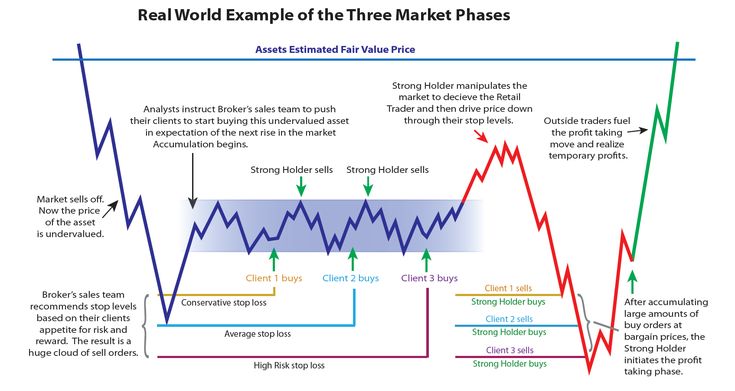
Manipulation in the forex market has quantifiable negative impacts across various participant categories. For institutional investors managing large portfolios, even minor price distortions can translate into significant losses. A 2-pip adverse movement on a $500 million currency hedge, for instance, represents a $100,000 loss that directly impacts performance and hedging effectiveness. Retail traders are particularly vulnerable due to smaller capital bases and often less sophisticated execution platforms, potentially experiencing magnified slippage or stop-loss hunting, where price movements are engineered to trigger stop orders before reversing. This can result in premature position closures and capital erosion that reduces trading longevity and confidence.
Beyond direct financial losses, market manipulation erodes overall market integrity and efficiency. It distorts price discovery, which is fundamental to a well-functioning market. If prices are not solely determined by genuine supply and demand, but by artificial forces, it undermines trust among participants. This can lead to reduced liquidity as legitimate traders become hesitant to commit capital, fearing unfair disadvantages. The 2013-2015 forex rigging scandals, for example, not only resulted in multi-billion dollar fines but also led to a significant overhaul of internal compliance protocols at major banks and increased regulatory scrutiny, aiming to restore confidence and prevent recurrence of systemic abuse.
| Manipulation Tactic | Mechanism | Market Impact | Detection Complexity |
|---|---|---|---|
| Benchmark Fixing (e.g., WM/R) | Collusion among traders to influence specific benchmark rates by coordinating large trades within a fixed window. | Distorts fixed rates, causing adverse execution for clients reliant on these benchmarks (e.g., corporate hedgers). | High; requires extensive communication monitoring, whistleblowers, and pattern analysis across multiple institutions. |
| Front-Running | Broker/dealer executes trades for their own account based on prior knowledge of a client’s imminent large order. | Client suffers adverse price slippage as their order moves the market against them, benefiting the front-runner. | Medium; detectable via Transaction Cost Analysis (TCA) showing consistent underperformance or timing discrepancies. |
| Spoofing/Layering | Placing and rapidly canceling large, non-bonafide orders to create false liquidity signals, influencing prices for actual trades. | Creates artificial price movements and lures genuine participants into unfavorable trades; reduces market depth temporarily. | Medium to High; requires sophisticated real-time order book analysis, order-to-trade ratio monitoring, and high-frequency data processing. |
- Utilize Regulated Brokers: Ensure your trading counterparty is regulated by reputable financial authorities (e.g., FCA, CFTC, ASIC) which enforce stringent market conduct rules and surveillance.
- Monitor Execution Quality: Employ Transaction Cost Analysis (TCA) tools or equivalent metrics to regularly assess your execution prices against market benchmarks and identify consistent adverse slippage or unexplained variances.
- Understand Market Depth: For large orders, analyze available liquidity across price levels before execution to anticipate potential market impact and assess whether unusual price movements occur during your trade.
- Implement Limit Orders: Instead of market orders, use limit orders to control your entry/exit price, thereby mitigating the risk of adverse price spikes or dips engineered by manipulators.
- Stay Informed on Regulatory Actions: Regularly review enforcement actions and guidance published by financial regulators concerning market manipulation to understand current threats and detection methods.